"I've been through this before with y'all, and I knew this was where we would end up. And here we are."
That's District 6 Council member Alex Wan, speaking at the September 8 Atlanta City Council meeting, just before the vote that ended a 15-month push to make Peachtree Circle a local historic district. The council voted 11-4 to file the legislation, and if you only read the headline, that sounds like a straightforward defeat. It wasn't. The vote that mattered on Peachtree Circle wasn't the one held in council chambers. It was a private tally of homeowner signatures, measured against a standard that appears nowhere in Atlanta's zoning code.
If you live in Ansley Park, or anywhere near the wide, tree-lined stretch of Peachtree Circle running between Beverly Road and 15th Street, you've probably followed pieces of this fight already. What's worth understanding now, with the council vote behind us, is what actually stopped this proposal and why that detail changes what happens next.
Filed, Not Defeated
When Wan asked the council to file the Peachtree Circle historic district legislation, he wasn't asking members to vote it down on the merits. Filing means the proposal goes into legislative limbo rather than getting an up or down verdict on whether the street deserves protection. The measure had already cleared two real hurdles: Neighborhood Planning Unit-E approved it, and so did the Atlanta Zoning Review Board. City staff signed off too. The council's 11-4 tally reflects members agreeing to shelve a proposal their own zoning process had already found sound, because the homeowners it would govern couldn't agree among themselves.
That distinction matters if you're trying to figure out whether this is truly finished. A proposal that's voted down on its merits usually needs a new legislative path to return. A proposal that's filed because of insufficient community consensus can, in theory, come back the moment that consensus changes.
The Standard Nobody Wrote Down
Here's the detail that got lost in most of the coverage. Wan told Rough Draft Atlanta that he wanted to see two-thirds support from Peachtree Circle residents before he'd move the legislation forward, a standard he described as something he has used with neighborhoods since taking office in 2010. When pressed on whether that supermajority was a legal requirement, he was direct: "Not a legislative requirement. Just a standard that I have been using with my neighborhoods."
That's not a technicality. It means the fate of a single Atlanta street, one that had already earned sign-off from planners and zoning reviewers, came down to an informal threshold one council member has applied consistently across three separate attempts at historic designation in Ansley Park since he took office, none of which reached his bar.
How Close Forty Actually Was
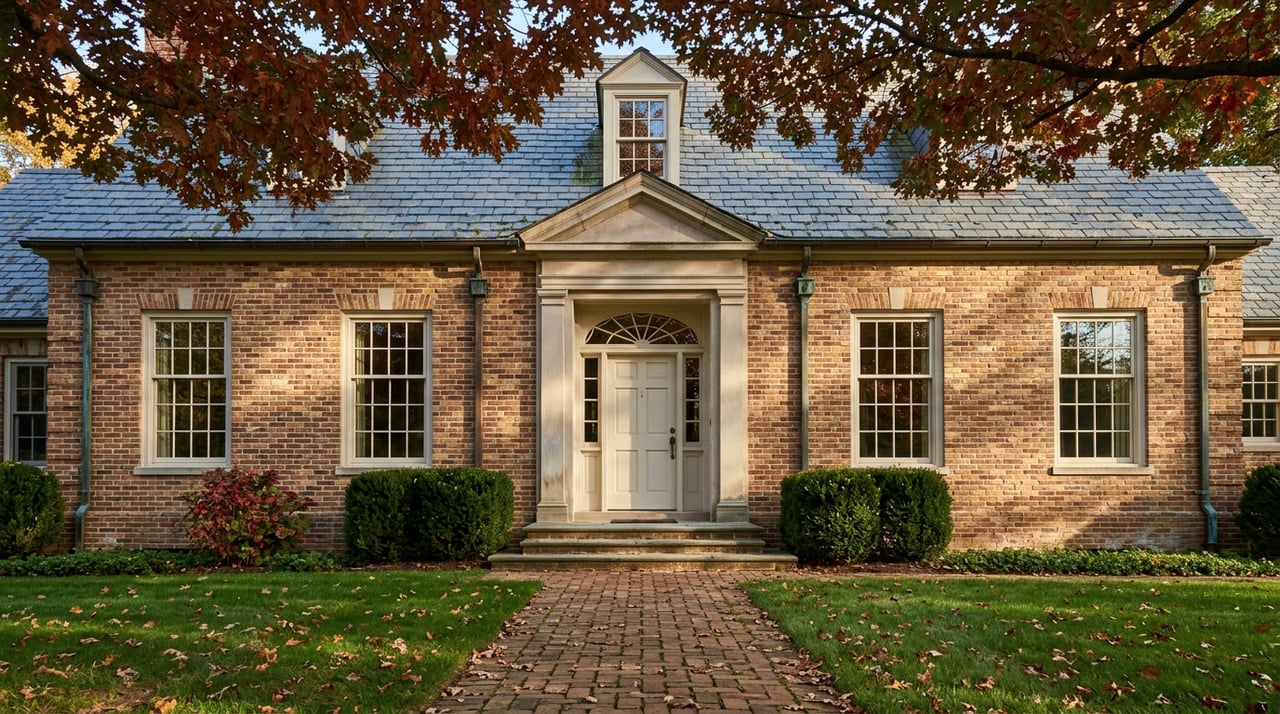
As of late August, 40 tax-paying Peachtree Circle residents supported the historic district. The designation was written to cover roughly 60 homes built between 1888 and 1934, or others matching that architectural character. Forty out of sixty is close to two-thirds on paper. It wasn't close enough in practice, and part of the reason is that the denominator itself was contested.
Council member Mary Norwood asked for a list of properties and how each would vote, and specifically flagged that homeowners who live in Ansley Park but not directly on Peachtree Circle were also weighing in on the proposal. When the pool of voices expands to include people who wouldn't be bound by the designation, the math behind "two-thirds" stops being a fixed number and starts being a negotiation over who gets counted at all. Nobody has published a formal roll of exactly who was eligible to vote and how that eligibility was determined. That ambiguity, as much as any single no vote, is what kept the threshold out of reach.
The House That Restarted Everything
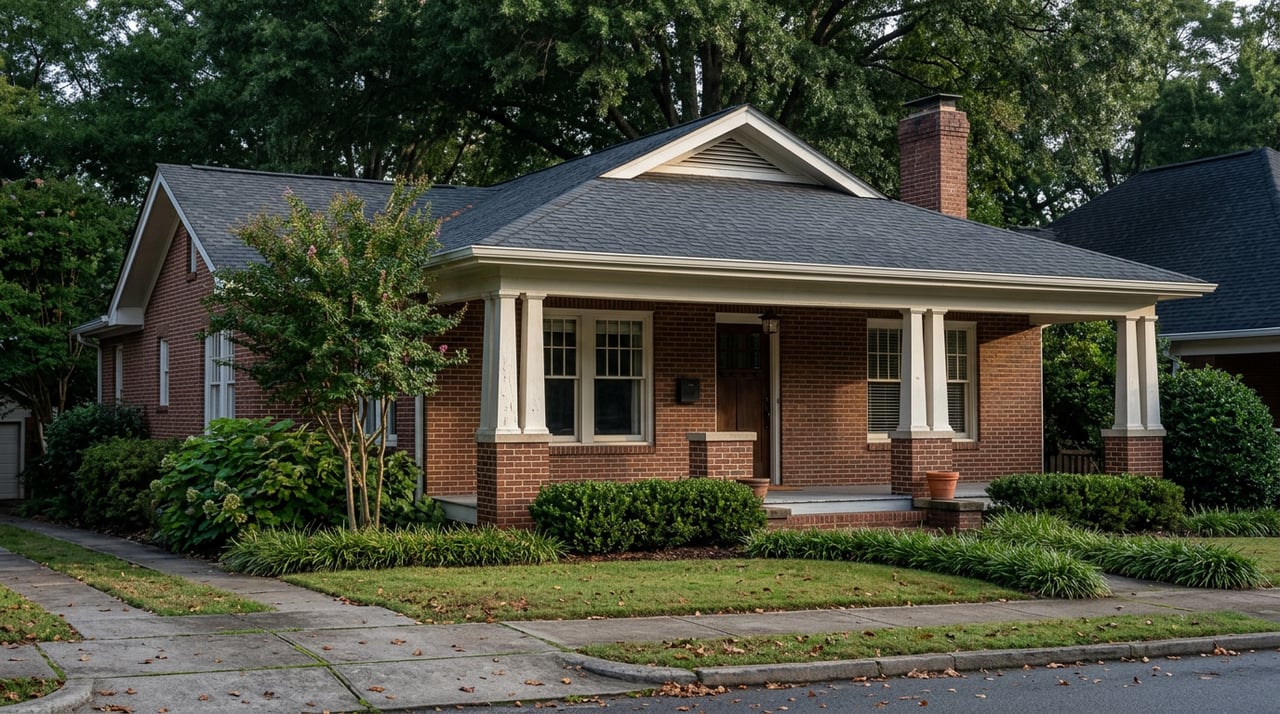
None of this happened in a vacuum. The renewed push traces back to January 20, 2026, when the new owners of 205 Peachtree Circle demolished an American Craftsman home that had stood on the street for more than a century, clearing the acre-plus lot to build larger. The city had approved the demolition permit before any moratorium was in place to slow further teardowns in Ansley Park. Atlanta Preservation Center executive director David Yoakley Mitchell called it a moment that should serve as a rallying cry for the city, since nothing in existing law had prohibited the teardown.
The same street holds the counterexample. The Randolph-Lucas-Jones House, a fixture at Peachtree Road and Lindbergh Drive since 1924, was purchased, physically relocated, and renovated onto Peachtree Circle at 78 Peachtree Circle by Roger Smith and his late husband, preservation advocate Christopher M. Jones. That house earned city landmark designation in July. One property on the street has the strongest protection Atlanta offers. Its neighbor a few lots down had none at all when the bulldozers arrived. That gap, sitting on the same block, is the entire argument for the historic district in one image.
A Street Divided on the Record
The disagreement here wasn't abstract. Dr. Margaret Scarlett, a 40-year Ansley Park resident, described the NPU review process as a closed-room exercise where residents were told to check a box rather than genuinely weigh in. Drew Gandy, who lives on Peachtree Circle and originally supported historic protection for the entire Ansley Park neighborhood, pulled back his support for this narrower version, saying his objection wasn't reflexive opposition to preservation but specific concern about how this particular proposal was structured. Neighbor Daysha Love wrote publicly that designating one street would make it easier to convert the rest of the neighborhood "one street at a time."
Wan didn't minimize how heated things got. "We've been threatened by litigation on both sides," he said at the September 8 meeting. "I've had to be frostily dispassionate on this because of the intensity of the positions on both sides." Rough Draft Atlanta reported that one resident said she was physically confronted by a neighbor over the issue during the process.
What the 1979 Listing Never Did
If you've lived in Ansley Park for any length of time, you've probably heard that the neighborhood is already on the National Register of Historic Places, and you'd be right. It has held that federal listing since 1979. What that listing does not do, and never has, is stop a homeowner from demolishing a contributing structure or altering its facade. The Georgia Trust has flagged Ansley Park as a Place in Peril for exactly this reason, noting that without a city-designated Local Historic District, the past decade has seen a number of architecturally significant homes torn down and replaced. Only a city ordinance, the kind Peachtree Circle was seeking and just lost the votes for, carries the power to require design review before a wrecking ball shows up.
That's the piece worth carrying forward if you own a home anywhere in Ansley Park, not just on Peachtree Circle. The Register plaque on your street sign is a historical marker. It isn't a permit requirement.
Where This Actually Stands
Because the legislation was filed rather than voted down on its substance, the door isn't sealed. Mitchell was unambiguous about what comes next: "I do not see this going away." Roger Smith, the owner who saved and relocated the Randolph-Lucas-Jones House, told Axios Atlanta he was "very disappointed that it's gone this way" and that some form of protective overlay for the street remains, in his view, necessary.
What changes for any future attempt is now clearer than it was in January. Proponents know the threshold they're being held to, even if it's informal. They know the count needs to hold up against scrutiny about who's eligible to be counted. And they know that a single demolition, like the one at 205 Peachtree Circle, can restart a fifteen-month process overnight, but it can't finish it without the kind of consensus that has eluded three separate attempts on this street since 2010.
If you own on Peachtree Circle, or anywhere in Ansley Park where this conversation is likely to resurface, the practical question worth sitting with isn't whether the historic district is dead. It's whether the next petition will define its supermajority before it starts circulating, rather than after the count comes up short. Josephine Traina has spent three decades advising Ansley Park owners through exactly these kinds of neighborhood inflection points, and if you want to talk through what a preservation designation, or its absence, could mean for a specific property on this street, reach out directly.